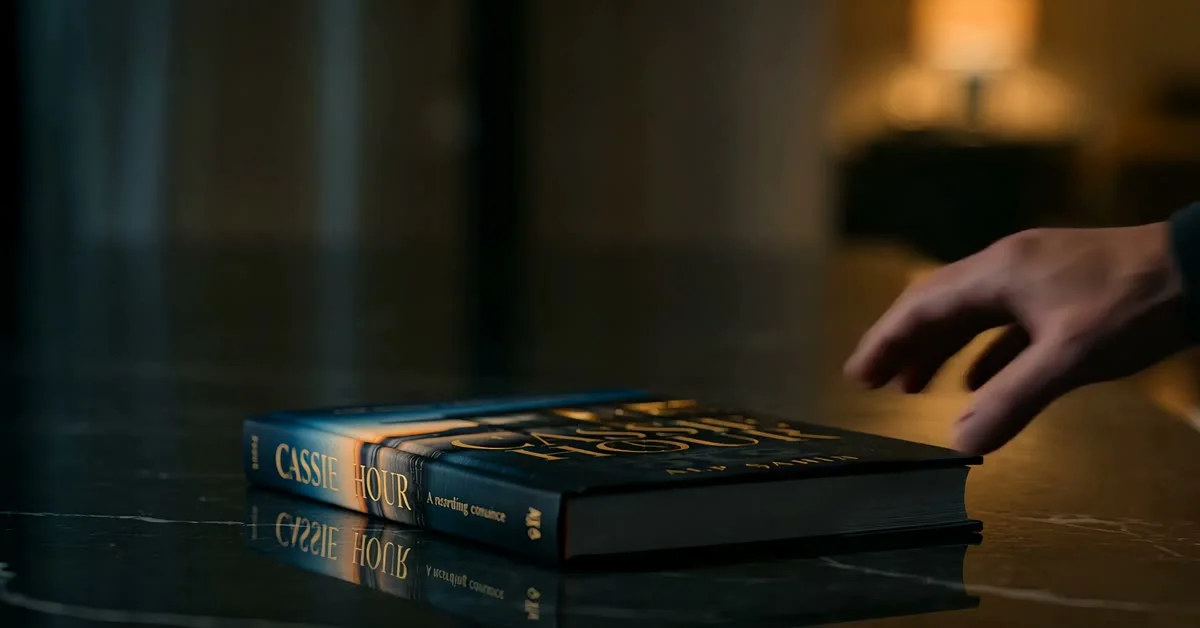
The Song Was the First Clue
A song-based mystery story works when the song is not an add-on. It has to matter like a fingerprint, a key, or a recording left running after midnight. That is the answer, and it is why the form can feel so complete: readers follow the music because the music carries evidence.
Cassie Hour is built on that line. A recent discussion around song-led mystery structures shows the idea has real reader curiosity, and an album-format crime novel listing shows the form already exists in the wild. But Cassie Hour takes a sharper path: the song is the first clue, not the bonus track.
Picture the villa at 4AM. The air is still warm, the corridors are lit in fragments, and someone has already taken the recording that matters most. What remains are witnesses, a chorus that returns like a trace of conversation, and the sense that every room heard something different. The mystery does not sit apart from the music; it is braided into it. A phrase repeats. A voice slips out of frame. A missing recording becomes the center of gravity.
That is the appeal of a romantic mystery shaped by sound: the chapters can hold the silence, while the song holds what was almost said. If you want the story itself, start with the novel first at Cassie Hour (opens in a new tab). If you want the atmosphere in its purest form, the song waits there too—but the book is where the file opens.