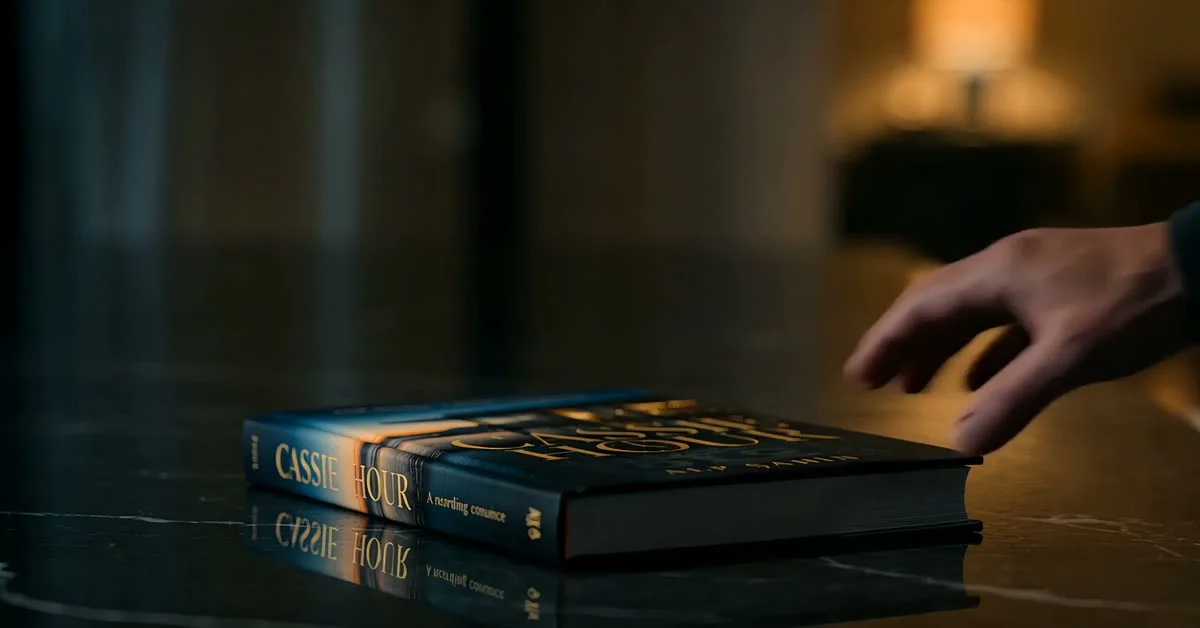
The clearest answer to books with transcripts mystery is this: the story feels closer to a recovered file than a conventional novel. In that form, the reader is not just following a plot. They are listening for what survived.
That is why Cassie Hour fits the shelf so precisely. Like the transcript-driven mysteries noted in The Twyford Code and The Mausoleum, it treats evidence as a structure: audio files, recalled lines, fragments that do not fully agree with one another. The tension comes from the gap between what was said and what was actually recorded.
Inside the villa, the air is wrong in the way only certain rooms can be wrong. A conversation has already ended, but its echo remains. Someone heard the chorus. Someone else only saw the recording light go dark. And somewhere between the witnesses, the missing recording, and the hour that returns, the story starts assembling itself from what refuses to stay buried.
That is the appeal of this kind of mystery: not the neat reveal, but the uneasy sensation that the truth has been edited. If you want that atmosphere at its source, start with the novel here: Cassie Hour novel (opens in a new tab). For the fragments around it, see Cassie Hour fragments.
If you are drawn more to the voice than the file, the song carries a different kind of evidence. Its chorus lingers like a note left on record after everyone else has left the room.